DIY Modular Notebook Framework
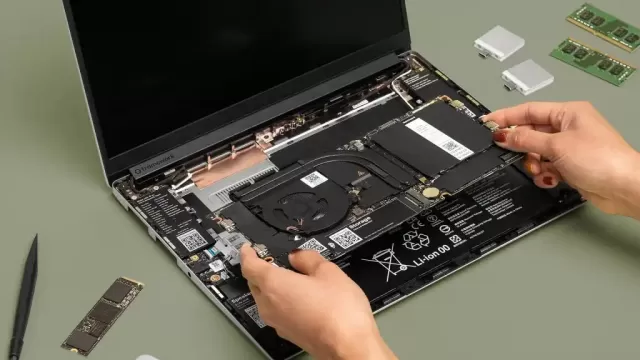
Framework, a laptop manufacturer, wants to alter the way we perceive laptops. We produce goods that are instantly replaceable or repairable because of a modular design. The business's initial models have already had considerable success, but it is still growing its product portfolio.
Framework recently debuted updates to its Framework Laptop 13 at the GDC Game Developers Event. The primary goal is to enable motherboards with AMD Ryzen 7000 and Intel 13th Generation processors in addition. With the recent release of Model Framework 16, external graphics are now supported. The GPU need to be smaller and still be built in the same modular fashion as before. We'll examine each of them individually.
First of all, the new Framework Laptop 13 is an upgrade over the previous Framework model. Later this year, a Chrome version will be made available, and it has been updated to a 12th Gen Intel CPU. The 13th Gen Core CPU or an AMD Ryzen 7040 motherboard are your options with this updated edition. For better DDR5 memory compatibility, the AMD version includes a Wi-Fi module. The latest motherboards from Intel or AMD can also be used with Framework 13 laptops that are already in use. To replace the existing product, you only need to buy the motherboard separately. An inexpensive improvement may be possible.
The first media and gaming device is the Framework Laptop 16. The body and screen have been increased, and there is now enough room to install an external graphics card. In addition, it provides a modular system similar to the current compact frame design so that components may be changed out as necessary. The extension bay, which offers PCIe x8 connectivity, is the most notable feature. You may utilize different peripherals by attaching them to the laptop body depending on your needs. In other words, it may be used to link components other than the graphics card, such M.2 storage card readers and video capture devices.
The frame laptop's back expansion bay adds to the total thickness and length, but it also makes it possible to use a variety of PCIe-compliant peripherals, including additional GPUs, storage, and card readers.
The "Keyboard Deck" is a further modular expansion option available for the Framework Laptop 16. In other terms, there are primarily three sections of the keyboard. You can choose from a subminiature panel (small module) or a numeric keypad, which is the default, in addition to the big module's regular laptop keyboard. Additionally, the user may mix and match them. A smart card reader, LED matrix, e-ink display, or haptic input slider are other options for selecting a secondary display. There are literally many options now that 3D print files and open source software are available.
Framework also made clear that it has recycled some of its old motherboards, which is an intriguing development. Along with Cooler Master, the company created a plastic carrying case. As a result, the new motherboard may be utilized as a little desktop computer, replete with RAM and M.2 storage. Add a few more frame modules, such as wifi, USB, and video. For home theater or kids' computers, this small PC works brilliantly.
The Framework website lists the 13-inch Intel and AMD variants of the new Framework Laptop. A head of time reservation is possible. A basic device without RAM, storage, or an operating system costs $849, while an all-inclusive model costs $1,049 to start. In May, the goods will actually be delivered. From this point on, new motherboards will also be sold to existing framework users. Later this year, you may get the bigger Framework Laptop 16. Pre-orders will only be accepted during the pre-order period; pricing and hardware specifications have not yet been disclosed. Again only stating that it will be available in the spring, the Cooler Master SFF case costs $39.